

Recently, Mr. Haukur Hardarsson, Chairman of Arctic Green Energy and Vice-Chairman of Sinopec Green Energy, published an op-ed in China Daily titled "Rethinking Energy Security in a Changing World", exploring the issues of geothermal energy and future energy security.
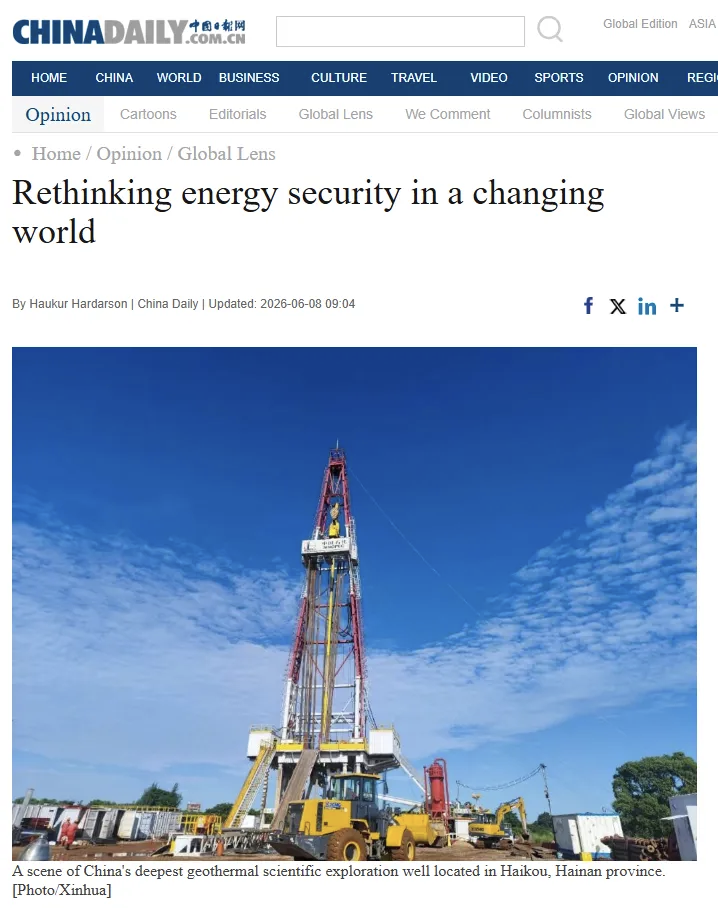
Amid current global geopolitical turbulence and escalating risks in traditional fossil fuel supply chains, the logic of global energy security is undergoing a profound transformation. At present, national energy policies generally prioritize fuel supply while neglecting infrastructure resilience, and they are excessively focused on the power sector while overlooking the development of urban and rural heating and cooling systems—which account for nearly half of global energy consumption. This has resulted in heating systems that are heavily reliant on fossil fuels and vulnerable to risks.
Unlike traditional fuel-based energy models, geothermal energy relies on long-life domestic infrastructure for supply and requires no ongoing fuel input. It possesses core advantages such as zero import dependence, stable costs, adaptability to urban environments, and the ability to synergize with wind and solar renewables, thereby breaking the misconception that geothermal energy can only be developed in volcanic regions. Iceland's decades of geothermal industrialization practice have validated the feasibility of geothermal energy in achieving energy independence and stabilizing energy systems. Backed by the platform of Sinopec Green Energy—established through China-Iceland technological cooperation—large-scale geothermal heating has been successfully implemented in China, aligning with the national strategies of energy self-sufficiency and "dual carbon" goals, while effectively solidifying regional energy security and improving the ecological environment.
By reviewing the pain points of the global energy transition and case studies of geothermal practices both in China and abroad, the article clarifies that the core of future energy security lies in system resilience rather than fuel acquisition, and emphasizes that geothermal infrastructure development is an important pathway to building a secure, low-carbon, and stable modern energy system.
Sinopec Green Energy is a professional Sino-Icelandic geothermal energy development and utilization joint venture established by Sinopec Star New Energy and Arctic Green Energy. Its main business covers geothermal heating (cooling), integrated development of geothermal plus multiple clean energy sources, manufacturing of geothermal core equipment, energy-saving retrofits, and carbon assets. Its development scale spans provinces and municipalities including Beijing, Tianjin, Hebei, Shaanxi, Shanxi, Shandong, and Sichuan, with a built geothermal heating (cooling) capacity of 120 million square meters. It has built over 10 geothermal heating "smoke-free cities," more than 20 cities with a heating scale of over one million square meters, and provides clean heating services to one million households.
On June 25, 2026, the 4th China-EU Energy Technology Innovation Cooperation Forum was held in Chengdu, Sichuan province. The Sino-Icelandic geothermal joint venture cooperation was showcased as one of the first batches of typical examples of China-EU energy cooperation.
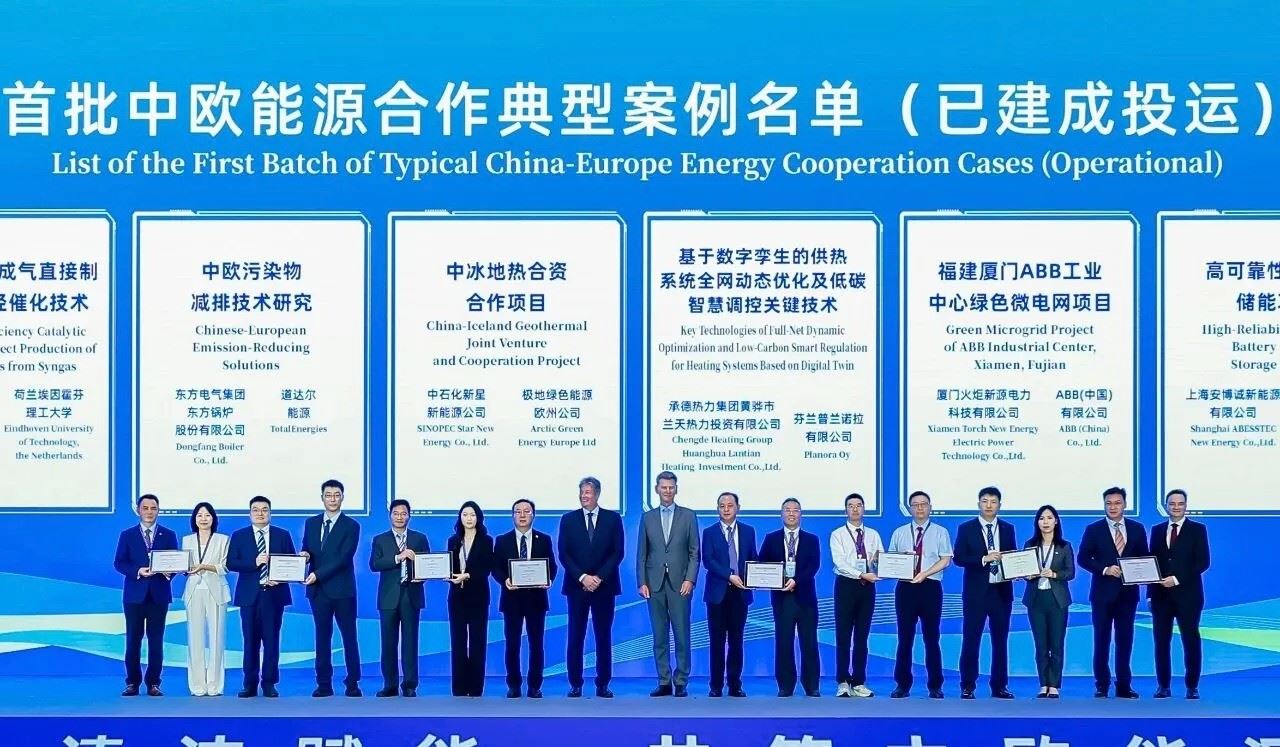
Mr. Fan Chuanhong, President of Sinopec Star New Energy, and Mr. Haukur Hardarson, Chairman of Arctic Green Energy, were invited to attend the event.
Click to view the original text
Rethinking energy security in a changing world